
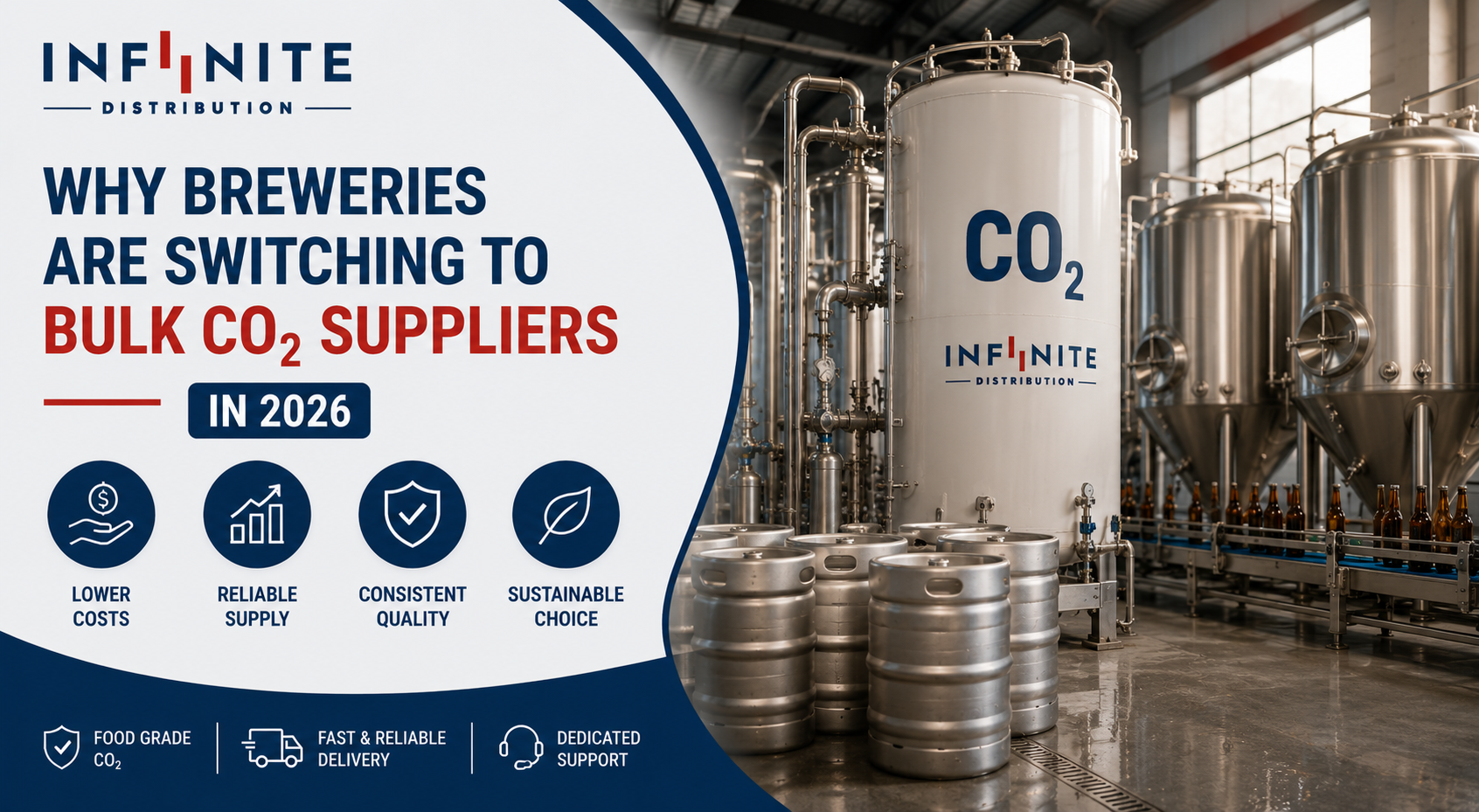
Ask any brewery that’s made the move, and the answer is rarely just about price. In 2026, more breweries across Europe are shifting from cylinder-based CO2 to bulk supply — and the reasons behind it say a lot about how the industry’s priorities have changed, especially after the supply disruptions of the past few years. Here’s what’s actually driving the shift.
Cylinder Swapping Doesn’t Scale
For a small brewery, swapping CO2 cylinders is manageable. But as production grows — more brewing, more canning, more kegging happening simultaneously — cylinder-based supply starts working against the operation rather than for it. A high-pressure cylinder setup generally only supports one task at a time, while a bulk system can feed brewing, packaging, and bottling lines simultaneously without losing pressure. For breweries running multiple lines at once, that difference alone often justifies the switch.
Canning Is Driving Up CO2 Demand
Canning has become the dominant packaging format for a large share of craft and independent breweries, and it uses noticeably more CO2 than bottling or kegging — largely because each can needs to be purged of oxygen before filling. As canning volumes grow, breweries relying on frequent cylinder deliveries start hitting the practical limits of that supply model faster than they’d expect.
Fewer Deliveries, Less Operational Disruption
Every cylinder swap is a small interruption — someone has to notice the tank is low, place an order, receive the delivery, and physically move cylinders through the brewery, often through food-service or production areas where that’s genuinely inconvenient. Bulk tanks, refilled on a scheduled route by the supplier, remove nearly all of that friction. Breweries switching to bulk consistently report less day-to-day disruption simply from not managing cylinder logistics manually.
The CO2 Shortages of Recent Years Changed How Breweries Think About Supply
CO2 supply disruptions — tied to ammonia and ethanol plant maintenance shutdowns, energy costs, and broader supply chain pressure — have made “reliable supply” a much bigger priority than it used to be. A bulk CO2 relationship with a supplier who manages consistent delivery scheduling gives breweries more supply security than repeatedly sourcing individual cylinders on an as-needed basis, particularly during periods when the wider market is under strain.
Some larger breweries have gone a step further, investing in CO2 recapture systems that reuse the CO2 naturally produced during fermentation — reducing how much external CO2 they need to buy at all. For most breweries, though, this doesn’t eliminate the need for bulk delivery entirely; it reduces reliance on it, while bulk supply remains the backbone of consistent carbonation and packaging supply.
The Real ROI Isn’t Just the Price Per Tonne
It’s easy to compare suppliers on price per tonne alone, but the businesses that get the most value from switching to bulk CO2 usually point to something else: fewer delivery delays, fewer disrupted production schedules, and better communication when something does go wrong. A supplier who’s difficult to reach during a delivery issue, or who springs unexpected fees into a contract, often costs a brewery more in lost production time than they save on the invoice. Reviewing a CO2 supplier relationship with the same scrutiny as an insurance policy or equipment vendor — rather than leaving it untouched for years — is increasingly common among breweries reassessing their setup in 2026.
What to Weigh Before Switching to Bulk CO2
Your actual volume and growth trajectory. Bulk makes the most sense once cylinder swapping starts becoming a frequent, noticeable task rather than an occasional one — and it’s worth planning for where your volume is heading, not just where it is today.
On-site space and installation. A bulk tank needs dedicated space and proper installation — worth confirming this fits your site before committing.
Supplier delivery reliability. The whole value of bulk supply depends on the supplier actually keeping your tank topped up on schedule. Ask about delivery track record, not just tank specifications.
CO2 purity and quality management. Bulk tanks should never be allowed to run completely dry, as this risks contamination of the lines — a reliable supplier will help you monitor levels and schedule refills before that becomes a risk.
Contract flexibility. As your brewery’s needs change, your supply agreement should be able to adjust with it, rather than locking you into terms that made sense at a different stage of growth.
Bulk CO2 Supply Built Around Your Brewery
We supply certified beverage-grade CO2 to breweries across Europe and the UK, with scheduled bulk delivery, ADR-compliant logistics, and a direct point of contact — so switching from cylinders doesn’t mean trading one set of headaches for another.
→ See our bulk CO2 supply program → Talk to us about CO2 supply for your brewery
Frequently Asked Questions
Why are breweries switching from CO2 cylinders to bulk supply?
Growing production volume, increased CO2 demand from canning, fewer delivery disruptions, and a desire for more reliable supply following recent CO2 shortages are the main drivers behind the shift.
At what point does bulk CO2 make sense for a brewery?
Generally once cylinder deliveries become frequent enough to create regular operational disruption — there’s no fixed volume threshold, but if you’re managing multiple cylinder swaps per week, it’s worth evaluating.
Is bulk CO2 cheaper than cylinders for breweries?
Often yes, per unit, at sufficient volume — but the bigger value for most breweries comes from reduced downtime and fewer disrupted production schedules, not just the price per tonne.
Do breweries still need external CO2 if they recapture fermentation CO2?
Usually yes. CO2 recapture systems reduce how much external CO2 a brewery needs to buy, but most breweries still rely on bulk supply as their primary source for consistent carbonation and packaging.
What should a brewery check before switching bulk CO2 suppliers?
Delivery reliability and track record, on-site space for tank installation, contract flexibility, and how the supplier manages CO2 purity and quality — not just the headline price per tonne.


